The industrial and manufacturing sectors are currently facing a dual-pronged crisis: massive swaths of veteran engineers are retiring, taking decades of highly specialized institutional knowledge with them, while the incoming workforce must be rapidly skilled up on increasingly complex, hazardous machinery. Traditional learning mechanisms—binders of schematics, shadow-training, and primitive desktop simulations—are simply failing to bridge this gap at the speed the market requires. The solution lies in spatial computing and Extended Reality (XR).
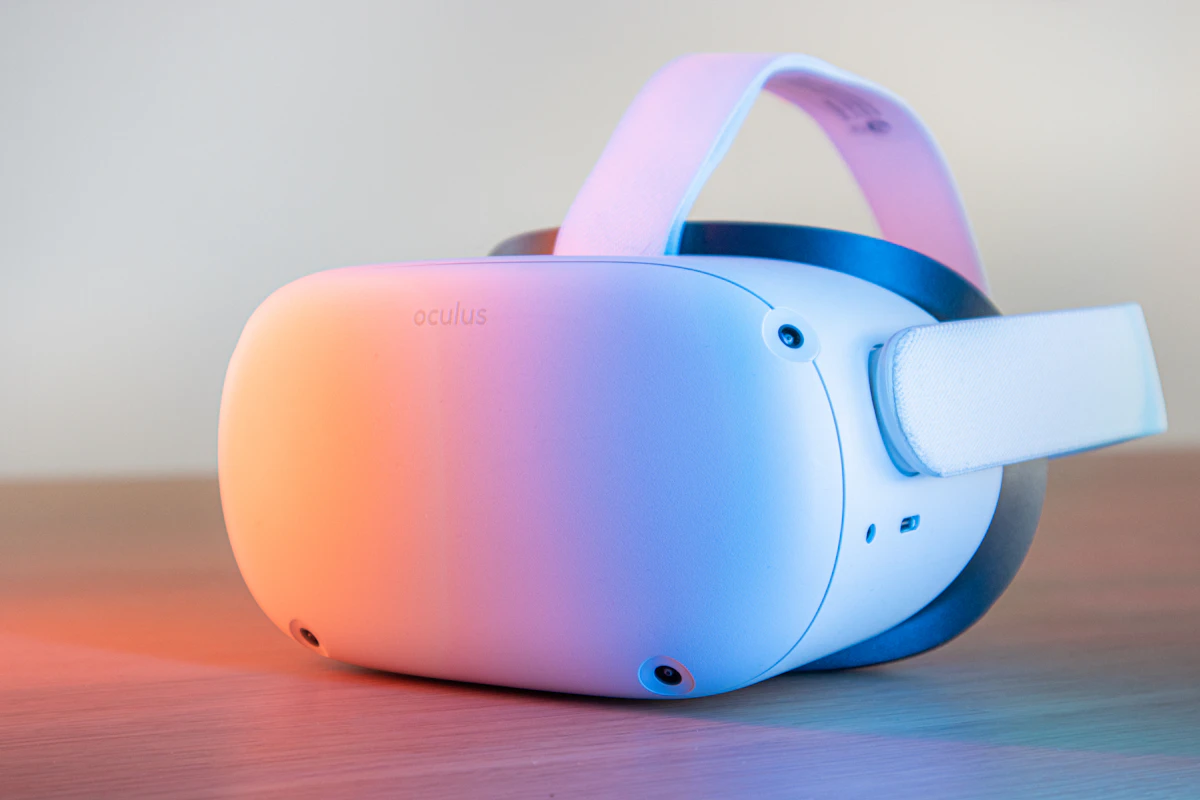
At PSY Millieniel, we have observed firsthand how Virtual Reality (VR) fundamentally hacks the brain's learning pathways. When an engineer repeatedly executes a complex maintenance sequence inside a hyper-realistic, 1:1 scale digital twin of a gas turbine, they are not merely memorizing a checklist; they are developing genuine spatial muscle memory. The brain processes the immersive experience identically to reality. This means when the engineer steps onto the actual factory floor, they operate with the confidence and precision of someone who has already performed the task dozens of times.
The financial calculus for adopting XR training is undeniable. Taking a multi-million-dollar piece of machinery offline for training purposes incurs massive opportunity costs and halting production. VR eliminates this entirely. Furthermore, we are able to simulate catastrophic, edge-case scenarios—such as a chemical spill, a flash fire, or a rapid pressure drop—that would be completely impossible (and illegal) to replicate safely in the real world. By studying an employee's biometric responses, pupil dilation, and decision-making speed during these digital emergencies, management gains unprecedented insight into operational readiness and psychological resilience.
Augmented Reality (AR) serves as the bridge for active, on-the-job execution. While VR is used for the training academy, AR is deployed on the front lines. Field technicians wearing mixed reality headsets receive step-by-step holographic overlays perfectly superimposed over real-world engines or electrical panels. If a screw needs to be torqued, an AR arrow points exactly to it. If a complicated maneuver is required, a remote senior expert can "beam" their hands into the junior technician's field of view, guiding them live from a control center halfway around the world.
As graphics processing units (GPUs) become more power-efficient and XR headsets continue to shrink into the form factor of lightweight glasses, this technology will cease to be a competitive advantage and instead become a strict operational baseline. By fusing the psychological benefits of spatial memory retention with the raw power of real-time 3D rendering engines, PSY Millieniel is helping global industries build safer, vastly more efficient workforces.
Back to Intelligence Briefs
XR Technologies
How Immersive Technologies are Transforming Industrial Training
March 10, 2026 8 min read
Elevate Your Enterprise Intelligence
Discuss how these theoretical architectures can be securely integrated directly into your global corporate infrastructure.
Schedule a Technical Consultation